Interviews
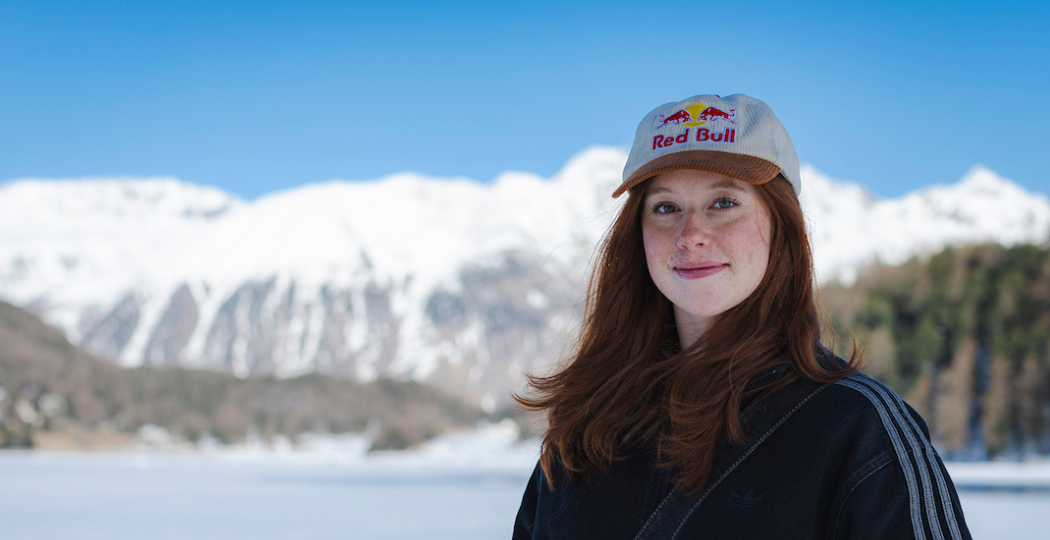
Top of her Game: Freestyle skier, Kirsty Muir
Cutting a trailblazing path on the slopes since the age of three, freestyle skiing champion Kirsty Muir made history in March when she became the first British woman to win both the Freeski Slopestyle and overall Park & Pipe World Cup titles
You’re constantly pushing the boundaries of what you can do in skiing. How do you balance that with the fear factor?
I’m never going to lie and say I’m not scared sometimes. But I’ve found lots of techniques that help me manage it. I don’t just go from doing nothing to attempting the biggest jumps – there are so many steps in-between that help me progress. Airbags are a big part of learning tricks these days, and it’s also about spending as much time on snow as possible. There’s always a point where you have to take a little leap of faith and try the next trick, and that’s when I have to trust myself. I also use breathing techniques to help calm my mind and visualise what I’m about to do.
Does learning to ski in Scotland give you more grit?
Absolutely. I think growing up in Scotland gives you more determination, because you learn to make the most of every opportunity you get to ski abroad. You don’t take those trips for granted. Every time I was away on snow, I was trying to push myself as much as I could and really make the most of it. There’s definitely something to be said for learning to ski on Scottish snow. When you can ski here, jumping over the heather and rocks and dealing with all the obstacles, you can ski pretty much anywhere.
At 17, you were Team GB’s youngest athlete at the Beijing 2022 Beijing Winter Olympics. When did you realise skiing was what you wanted to pursue?
Both my parents ski, and they wanted me and my siblings to learn so we could ski together as a family. I started going to a Saturday kids’ club at the dry slope in Aberdeen. I’d spend the last ten minutes on the freestyle slope, trying little jumps, and everyone could see how much I loved it. I was around 13 when I really started to see skiing as something I wanted to pursue competitively. I was travelling more, missing more school and spending longer periods away, although I was still keeping up with all my work.
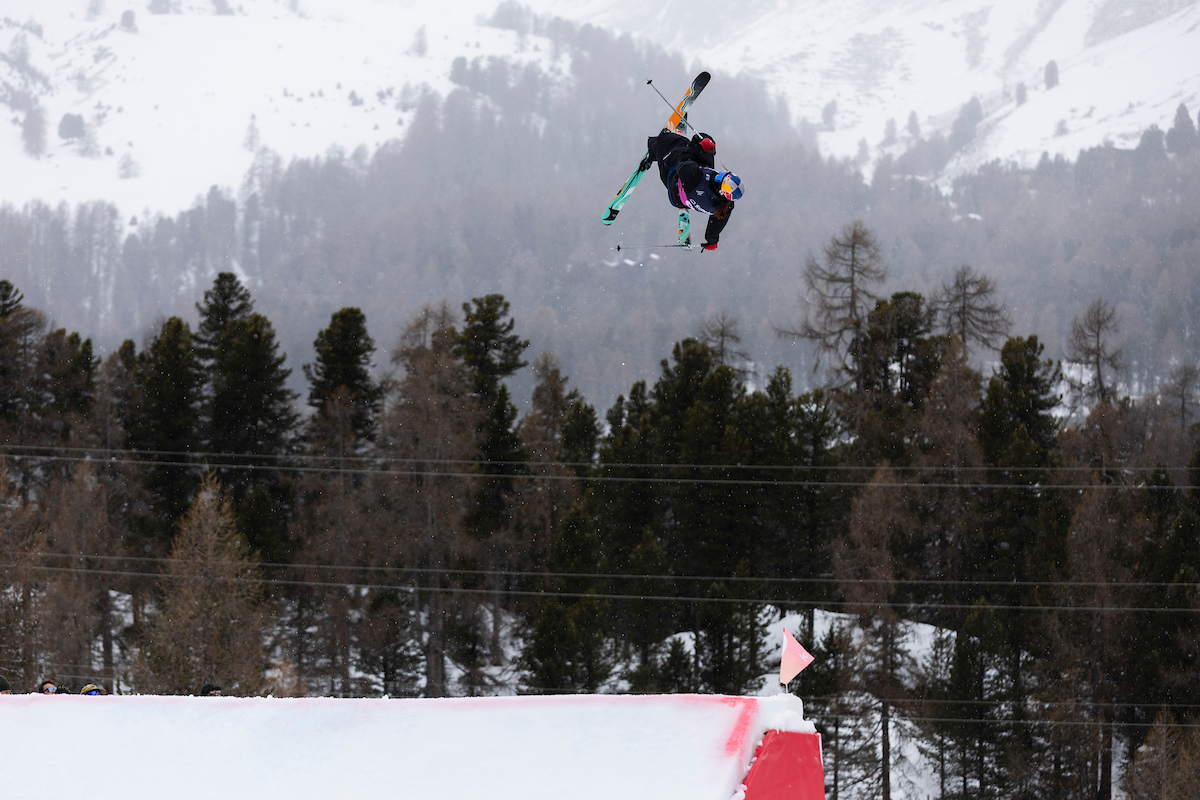
Muir competing at the 2025 Freestyle World Championships in St Moritz
What has it taken for you to get to an elite level?
There’s the time and practice I put into skiing, but there’s also a lot of work outside of it – trampolining, gymnastics and things that develop my air awareness. I’m also competitive and definitely determined when I put my mind to something. The team around me has played a huge part in making me the skier I am. I’ve worked with one of my coaches since I was 11 or 12, and my physiotherapist has helped me through so many injuries. It’s not the safest of sports, so having that support around me has been hugely important.
You had a period of recovery after knee and shoulder surgery in 2024. How did you navigate that psychologically?
I learned a lot during that time, and I changed as a person too. The biggest thing was learning patience. I’ve always wanted to do more and more, so having to stop my sport for 11 months was a real struggle. I also learned to understand my body better – when I need to rest and take a break, and when I can push harder. Before, if I took a day off, I’d feel guilty and think, ‘I should be doing something.’ Now I understand that rest actually helps me perform better.
After a big couple of seasons, what’s next on the horizon?
My days are mostly about the gym because I had surgery in April, and I’m coming to the end of my rehab. I’ve been putting everything into getting back to full fitness. The last couple of seasons were so focused on Olympic qualification that this year feels a little different. It’s a post-Olympic season, and there are some exciting things coming up. The X Games are introducing a new team format this year with three different competitions, so that’s going to be very different but really fun.